
Understanding Darke County Released Inmates
The Darke County Correctional Facility is a county-owned jail operated by the Sheriff. Its live roster calls the same site Darke County Jail. The roster is only a current snapshot. Once a booking closes, the person usually disappears from that view, but the missing name does not say why the episode ended.
There are three broad paths. A community release may follow bond, recognizance, time served, sentence completion, dismissal, or another court order. A transfer closes Darke County custody while ODRC, another jail, BOP, ICE, or another agency takes over. Escape and death can also remove a name, yet neither is an ordinary release. The Sheriff’s booking and release record identifies the physical event. Municipal or Common Pleas court records explain the legal authority.
Darke County Release Types
Preserve the agency’s exact wording. Similar-looking events can lead to different next steps, and an internal code should not be expanded without an official key. The table shows the practical meaning of common terms documented in the Darke County research.
| Event | Meaning | Next source |
|---|---|---|
| Bond or recognizance | Pretrial release under court terms; other holds may still delay exit. | Court bond entry and Sheriff release time. |
| Time served or expiration | The local custodial part of a sentence ended. | Sentencing entry, jail credit, and release sheet. |
| Dismissal or court order | The case or custody authority changed, but another hold may remain. | Certified court entry and jail transaction. |
| ODRC conveyance | County custody ended and state-prison custody began. | Common Pleas entry and ODRC admission/status. |
| Parole or judicial release | A state prisoner left prison for supervised community status. | ODRC detail, Board or court record, and APA office. |
| Federal or ICE transfer | Another sovereign may hold the person after the county booking closes. | BOP, ICE, federal docket, or receiving agency. |
Probation is not a prison release type. It is court-ordered community supervision and may follow local custody. Post-release control and parole are state forms of supervision after prison. “Discharge” can mean the later end of custody or supervision, so it should not be assumed to match the jail-door date.
Note: The recorded event type controls the next search, so preserve the Sheriff’s wording until an official source defines it.
Darke County Release Record Fields
A useful Darke County release record ties one person to one booking episode. A name by itself can be ambiguous. Ask for existing identifying and event fields, and leave exemptions or redactions to the custodian.
| Field | What it shows |
|---|---|
| Full name and maintained aliases | The identity used for that booking. |
| Booking or arrest number | The unique local episode being reviewed. |
| Booking date and time | When the county custody record began. |
| Actual release or transfer time | When Darke County physical custody ended. |
| Release type, reason, or code | The recorded event, without editorial guesswork. |
| Authorizing court and case | The legal matter linked to the event. |
| Destination or receiving agency | Continued custody when maintained and public. |
| Booking photograph | The intake image, which does not itself prove release. |
A court journal entry often lasts longer than a live roster result. It can explain bond, disposition, sentence, conveyance, or judicial release. Still, the order may precede physical exit. The jail record gives the custody transaction, while the court record gives the legal basis. Pair both when the exact outcome matters.
Request Darke County Release Records
The Darke County Sheriff Records Division is the local archival fallback. Its public page lists report-copy service Monday through Friday from 8:00 a.m. to 4:00 p.m. and says responses may take two to three business days. That is office guidance, not a fixed legal deadline for every request. Consult the current fee schedule and request an estimate.
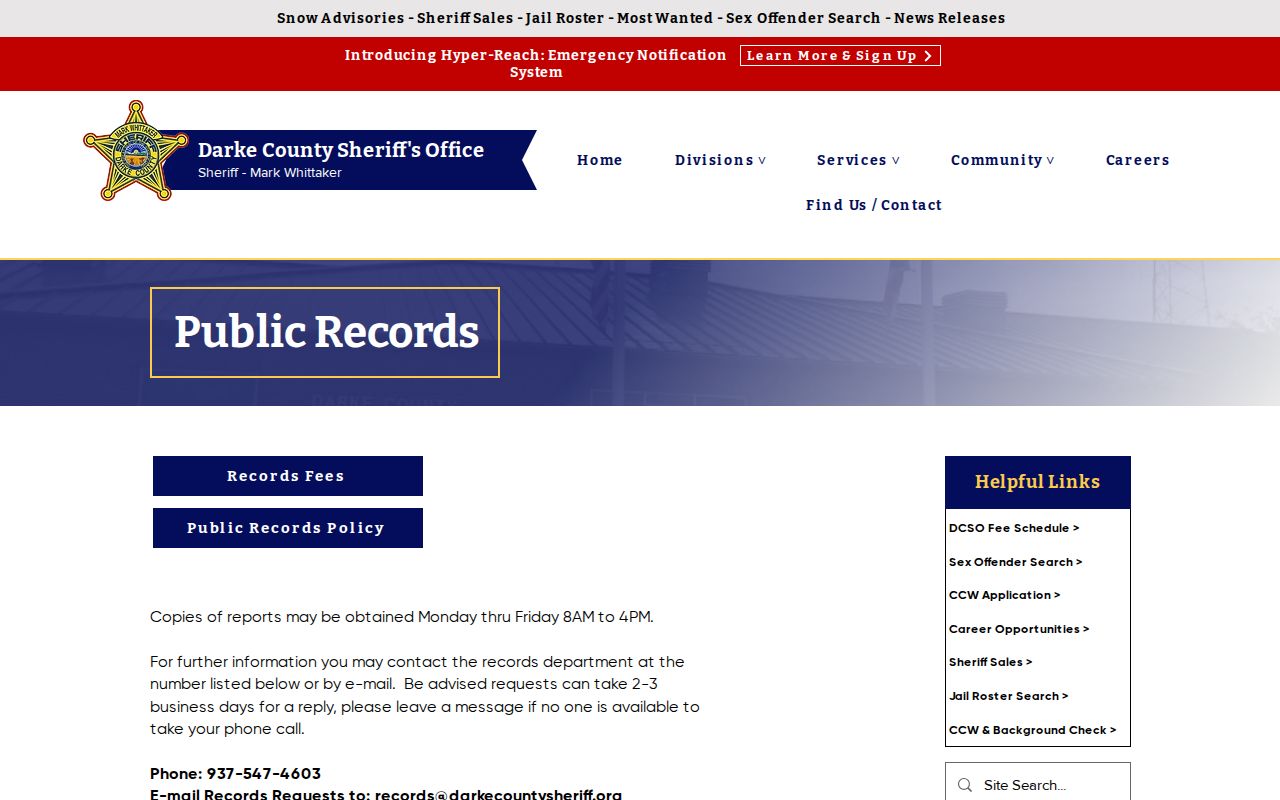
The Sheriff records screen supplies the official request channel used when a released person no longer appears on the current roster.
- Identify the person, approximate booking date, case or booking number, and a narrow date range.
- Ask for the existing booking and release record, including actual release or transfer time, type or code, authority, and receiving agency when public.
- Request electronic copies and nonexempt portions. If content is withheld, ask for the cited legal basis.
- Match the response to Municipal or Common Pleas court entries and any receiving-agency record.
- Keep the cover email, filenames, code wording, and redaction explanation with the conclusion.
5185 County Home Road
Greenville, OH 45331
937-547-4603
records@darkecountysheriff.org
No official online retention period for former roster entries was found because the public roster has no released-person view. Ask the custodian what records are maintained. Sealed, expunged, juvenile, medical, victim, investigative, and security-related material may be restricted. A blank public search after sealing is not proof that no event occurred, and protected material should not be reconstructed.
Note: A narrow request tied to one booking episode is easier to verify and less likely to mix records from separate arrests.
Ohio Law on Darke Release Records
Ohio Revised Code 149.43 generally calls for responsive public records to be prepared promptly for inspection and copies within a reasonable period, subject to exceptions. A requester may seek paper, the medium kept by the office, or another medium the office can reasonably duplicate. Lawful copy and delivery costs may apply.
A request generally need not be written, identify the requester, or state a purpose as a condition. If wording is too broad or unclear, the office should provide a chance to revise it and explain how records are kept. Nonexempt portions remain important when part of a record is withheld. Ohio’s sealing and expungement statute is specific to offense, case history, waiting period, and final discharge, so no generic checklist replaces the court’s ruling.
Note: “Final discharge” may occur after physical jail release when other sentence or supervision terms remain in force.
Sealed Darke County Release Records
Ohio’s current sealing and expungement law makes eligibility depend on the offense, conviction history, final discharge, and other statutory limits. The exclusions include listed traffic matters, many felony offenses of violence, registration-triggering sex offenses, specified crimes involving young victims, theft in office, first- and second-degree felonies, and other named categories. The statute, not a broad rule, controls the individual case.
Waiting periods also differ. The research documents examples ranging from six months for a minor misdemeanor to longer periods for other misdemeanors and eligible felonies. A court considers pending cases, rehabilitation, objections, victim input, and the interests at stake. The state filing fee is $50, with a possible local fee up to $50 and a poverty-affidavit path.
Final discharge is not always the day a person leaves the jail. Probation, community control, post-release control, restitution, or another sentence part may continue. If the court grants sealing or expungement, official records and index references are handled under the statute and its exceptions. Respect the restriction. A missing public result after an order should not be used to reconstruct protected details from old copies.
Read Darke County Release Codes
A response that only says “released” may not answer the real question. Ask whether the code distinguishes bond, recognizance, time served, sentence expiration, dismissal, court order, transfer, escape, or death. When a transfer field is maintained and public, request the receiving agency and timestamp. If it is withheld or does not exist, use the court record and the likely recipient’s official search.
Keep agency codes in quotation marks until the meaning is confirmed. “REL,” “TR,” and similar shorthand can vary by system. Ask whether the Sheriff maintains a public code key. If not, report the code as recorded and state that its meaning remains unconfirmed. This avoids turning a data label into a claim the record does not support.
For bond, pair the release sheet with the bond order, posting entry, conditions, and later modification. For time served, compare the release record with the sentence entry and jail-time credit. For judicial release, obtain the Common Pleas granting entry and ODRC’s actual release or supervision-start record. The paired sources show both authorization and execution.
Darke County Bond Release Process
The Darke County Municipal Court bond page supplies unusually clear local detail. Bond may be posted at court during business hours or at the Criminal Justice Center after hours. Surety or corporate bond, full cash after hours, and own-recognizance release are different paths, and each can carry conditions.
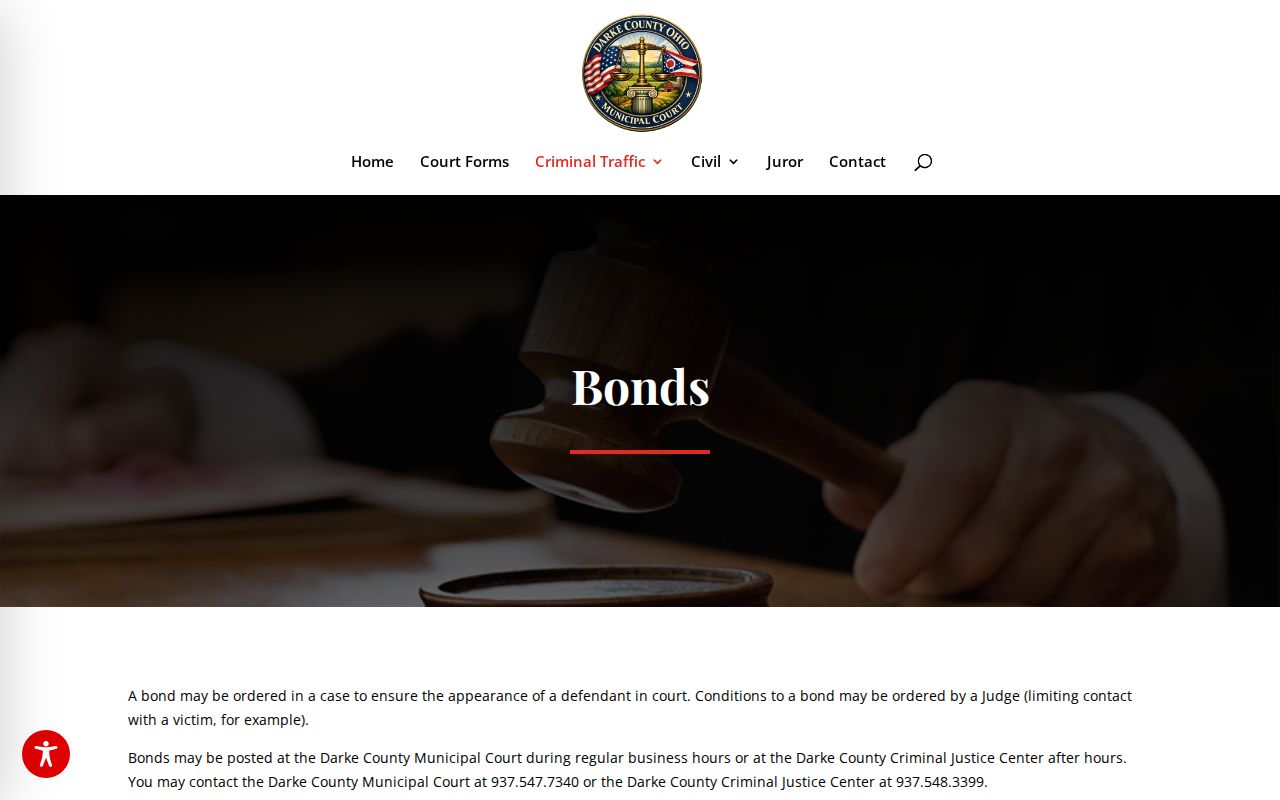
The official bond screen documents the authorization and posting channels, which must still be paired with the jail’s actual release timestamp.
The court lists a $25 nonrefundable posting fee. Local rules also describe processing at 8 a.m. and 8 p.m. when court is closed, though the current rule should be checked before relying on those times. Posting is one step in the release process. It does not prove the person finished jail processing, cleared another hold, or physically left at the posting time.
Note: Confirm the current bond rule and actual jail release time because a posting timestamp is not the physical exit timestamp.
Courts Confirm Darke County Releases
Darke County has two main court paths. Municipal Court handles misdemeanors, bond events, and applicable preliminary matters. Its official search warns that online data can lag, change, or be amended. The court’s request form lists certified copies at $5 each and noncertified copies at $0.25 each, with a stamped self-addressed envelope for mailed requests.
The Municipal Court screen can locate the legal action, while a verified copy and the Sheriff record resolve authority and physical timing.
Common Pleas handles felony sentencing, ODRC conveyance, judicial release, community control, revocation, and termination. The court says pleadings since August 2020 are generally viewable in full, subject to confidentiality.
The Common Pleas source supplies the felony order path. Use the court that issued the controlling order, then use Sheriff or ODRC records to confirm when it was carried out.
Getting Home After Darke Release
Darke County Correctional Facility sits outside Greenville. Greenville Transit is shared-ride demand-response service, not a fixed route that can be promised at the jail exit. The released person or family should call 937-547-1811 and confirm whether a trip is available.
The city publishes weekday and weekend service windows and a $4 general-public one-way city fare. Countywide service has stated limits, while other city material makes county trips subject to advance notice and driver availability. Because those details can change the real pickup answer, confirm the trip and arrange a backup instead of assuming the bus will reach the rural jail site.
Darke Release Facility Context
The Sheriff describes the Darke County Correctional Facility as a 36-bed, county-owned, non-smoking jail. An Ohio grant summary from May 2025 lists $136,809 for renovation work involving the sally port, intake, booking, medical, and mental-health areas. That is facility context only. It does not show that work is complete or create a public release feed.
The official jail page connects the facility with its current roster.
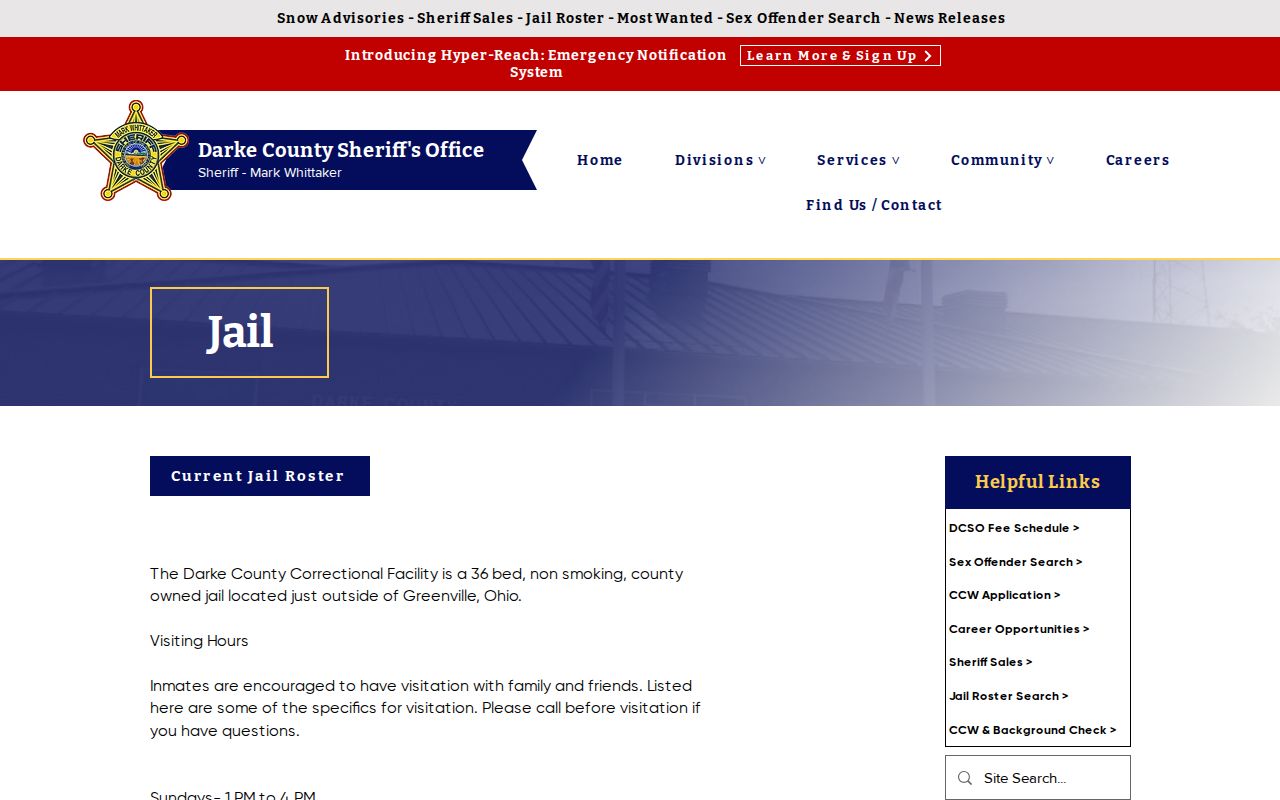
The facility page establishes the county jail source and location. The booking and release record remains the source for a completed local custody event.
Find a Released Darke County Inmate
Begin by defining the custody being tested. If the question is whether the person left Darke County Jail, search the live roster after its human check. Record the timestamp and spelling used. A match supports current listing. No match starts the inquiry but cannot finish it.
The official Darke County current-custody roster states its present-only scope and update cycle.
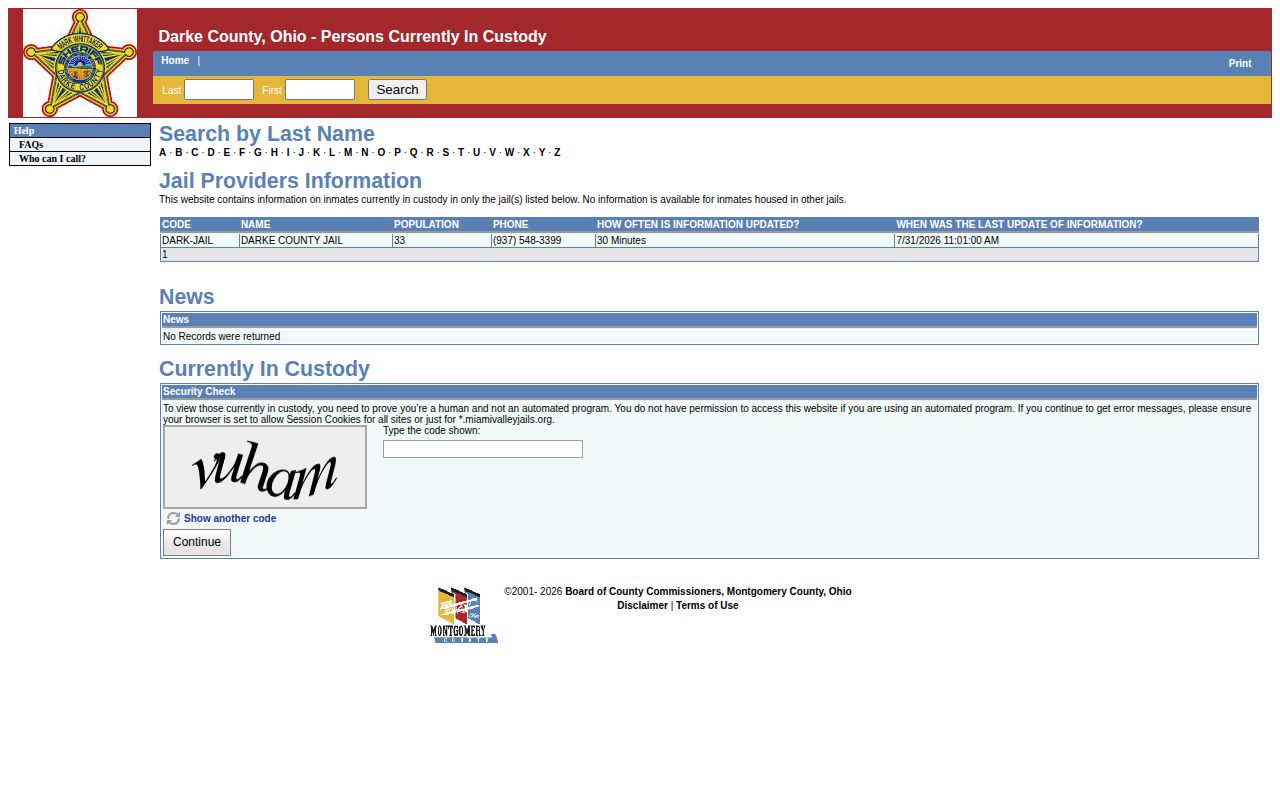
The roster screen establishes the live starting point, but it has no public history that explains why a former entry disappeared.
- Call the Jail Division at 937-548-2020 option 2 or 937-548-3399 and ask whether the identified booking ended by release or transfer.
- Request the Sheriff booking and release record for the actual event time, type, authority, and destination.
- Search Municipal Court for misdemeanor or bond matters and Common Pleas for felony matters.
- If ODRC received the person, use offender number or a narrow name search and read status before any date.
- Use VINE for alerts, BOP for a federal sentence, ICE for immigration custody, and the recipient named by the county record.
For a person seen yesterday but gone today, save the roster update time. Ask whether that same episode closed. If the record says bond, inspect the bond order and conditions. If it says time served, compare the sentencing entry and jail-time credit. If it says transfer, follow the receiving agency. These checks keep “not here” from being misreported as “released home.”
Note: Use an offender or booking number when available because name-only searches can join records that belong to different people.
ODRC Search for Darke Releases
The ODRC Offender Search covers state prisoners, people under APA supervision, judicially released people, violators at large, and records returned by its Released filter. Ordinary county bond-outs and local sentence completions may never appear because ODRC is not a Darke County booking archive.
| Search field | Use | Important limit |
|---|---|---|
| First and last name | Broad identity search. | Fewer criteria may return better results. |
| Offender number | Best stable match when known. | Use the letter prefix and six digits, including leading zeroes. |
| County of commitment | Narrows a state case tied to Darke. | It does not mean the person is housed in Darke County. |
| Status | Separates incarcerated, APA supervision, judicial release, VAL, and released results. | Open the individual detail before concluding. |
| Hearing month | Searches the next Parole Board month in YYYYMM form. | Eligibility or a hearing is not release. |
Read status first. “INCARCERATED” means state custody. “APA SUPERVISION” supports release from prison into state supervision, not unconditional discharge. “APA SUPERVISION - VAL” or violator at large indicates alleged absconding; follow ODRC instructions and do not attempt contact. The field “Expected Release Date/Parole Eligibility Date” can mean a projection or only eligibility for Board review.
The official ODRC search screen shows the Released and APA status tools used for a Darke County state-prison check.
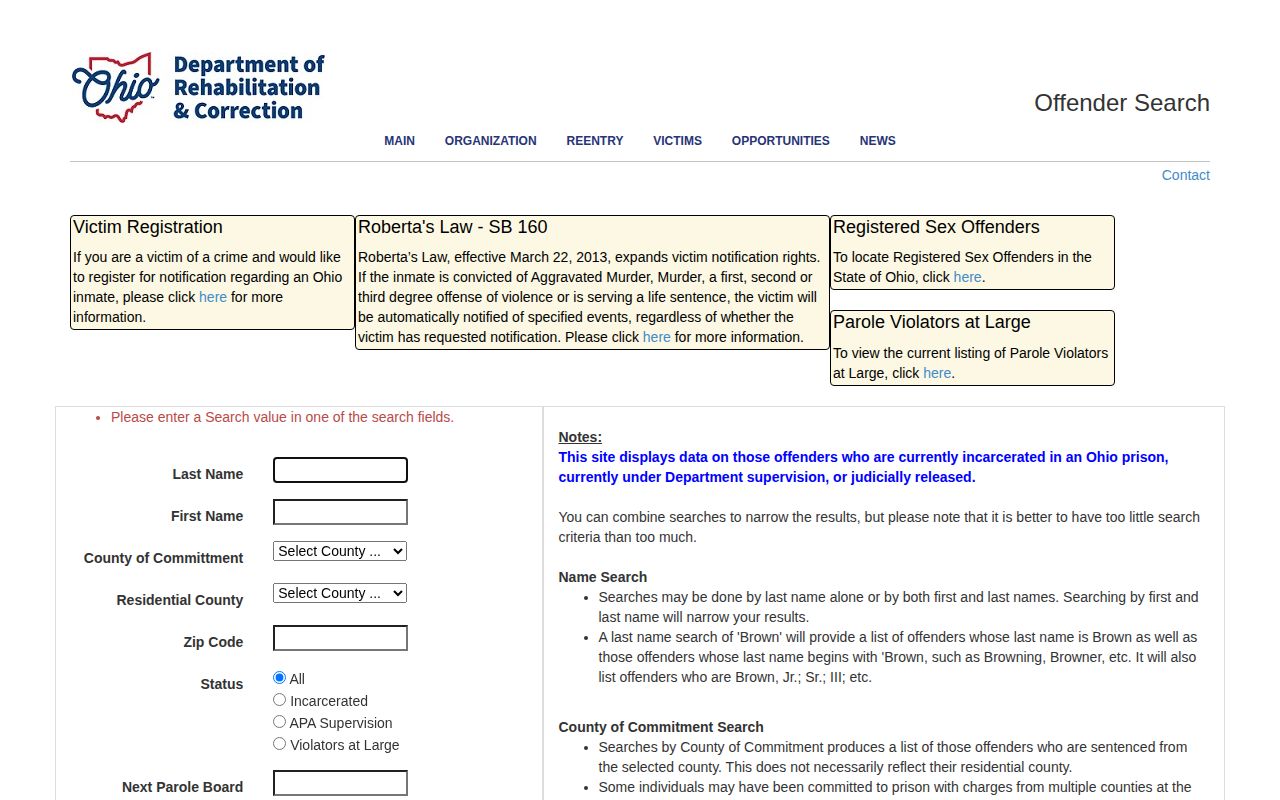
Open the matching detail and compare ODRC number, admission, offense, release detail, supervision start, APA office, and hearing fields before recording the outcome.
Darke County Recent Release Limits
Darke County publishes no identified 24-hour or 72-hour released-inmate feed. The Miami Valley interface offers name inputs and an A-to-Z browse after a security check, but its own scope is “Persons Currently In Custody.” It reports a 30-minute update cycle and no released archive, history control, or disclosed retention window.
For a same-day event, record the roster time and call the jail. For a multi-day interval, ask Sheriff Records whether an existing release log or export covers exact start and end times. Ohio law does not require creation of a custom list. If no combined report exists, request the named booking and release record. The Released Last 24 Hours page sets out that focused same-day workflow.
Note: The current roster supplies a timestamped custody snapshot, while Sheriff Records supplies the historical event that the roster omits.
Darke Supervision After Release
State and county supervision are different. Ohio Adult Parole Authority supervises people released from state prison. An ODRC detail may show “APA SUPERVISION,” supervision start, period, and assigned office. Judicial release also requires the sentencing court’s entry. A supervision-end field concerns the later end of APA authority, not the original prison exit.
Darke County Common Pleas Adult Probation supervises court-ordered community control and can be reached at 937-547-7330. A person released from the county jail directly to community control may never appear under APA supervision. Municipal probation belongs to its sentencing court. Verify the docket and correct office rather than treating parole, post-release control, and probation as one status.
- Parole
- Conditional state-prison release under APA authority for a parole-eligible sentence.
- Post-release control
- State supervision after prison under the applicable sentence.
- Probation or community control
- Court-ordered local supervision that may not involve ODRC custody.
- Discharge
- The later end of custody or supervision authority.
Darke Release Alerts and Federal Checks
Ohio VINELink is a free notification system for participating county jails, ODRC, and ODYS. County events include general release, transfer, escape, and death. ODRC contributes more prison and parole events. VINE is best used while the person is in custody, and the Ohio Attorney General warns against relying on it alone. An alert should prompt a call and record check.
For a federal sentence, the BOP Inmate Locator searches records from 1982 forward by federal identifier or name. A past release date with “Released” or “Not in BOP Custody” confirms departure from BOP, not freedom from every agency. First Step Act calculations can also affect displayed dates. Compare the federal docket and any later custodian.
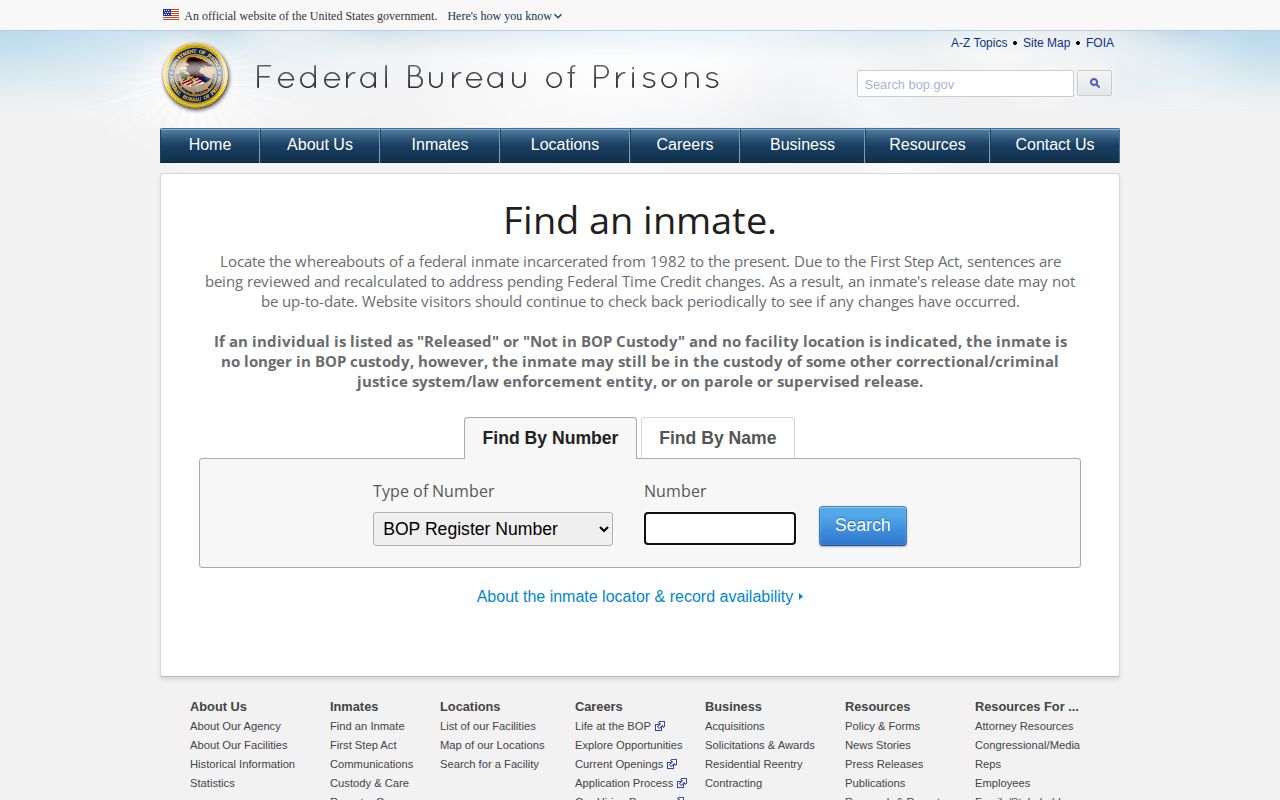
The locator screen applies only to federal BOP custody and cannot replace the Darke County jail record or another agency’s status.
The BOP also publishes an official explanation of locator records and the limits of release labels.
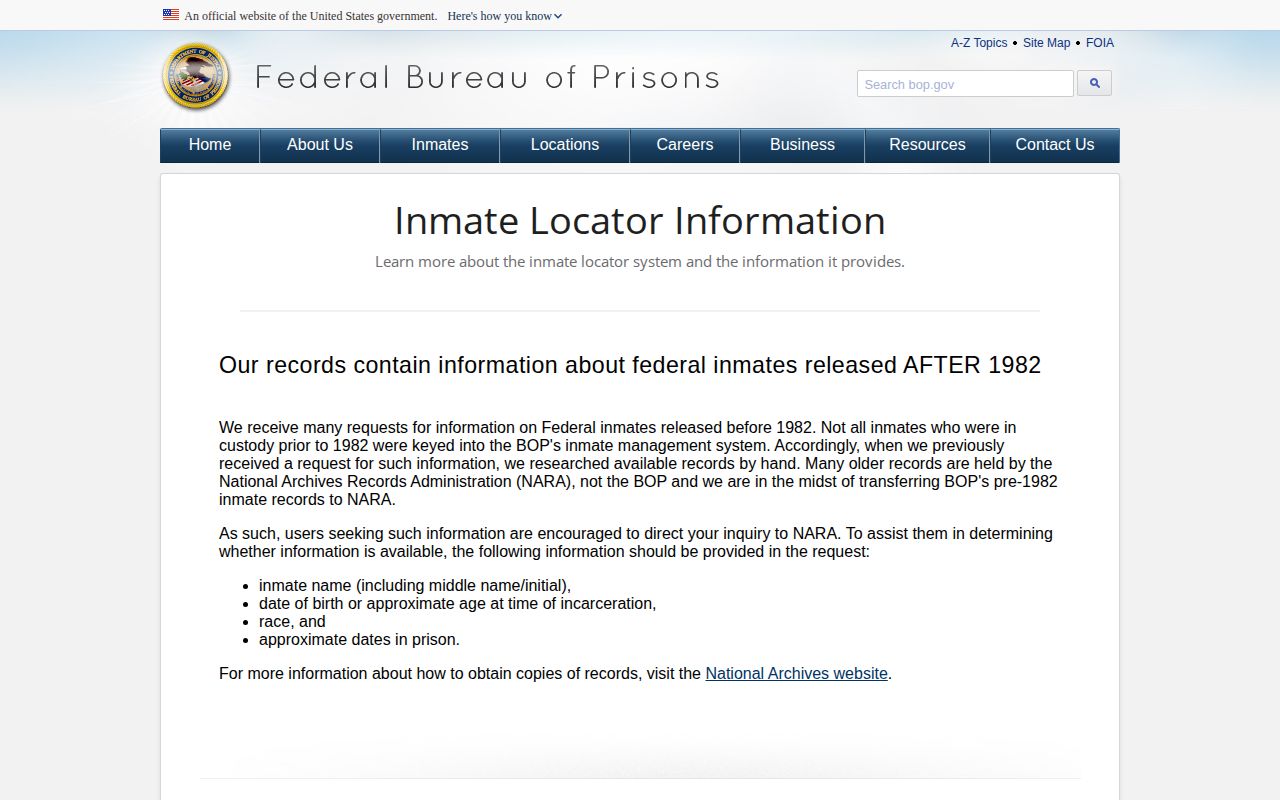
The explanation supports a narrow conclusion: departure from BOP does not rule out supervision or custody held by another justice agency.
ICE ODLS accepts a nine-digit A-number plus country of birth or an exact biographical search. It focuses on current detainees and, according to ICE, some people released within the prior 60 days. Not everyone appears. The official phone fallback is 1-888-351-4024. USMS has no comparable public released-person locator, so the federal docket, BOP, and a focused records request form the public chain.
Note: Each federal system answers only for its own custody, so confirm the next agency before calling any result a full release.
Where Darke Release Records Appear
Choose a source by custodian and question. Current rosters answer a different question from historical release records. A state or federal locator does not replace the county jail record for an ordinary Darke booking.
| Source | Best evidence | What it cannot prove alone |
|---|---|---|
| Darke current roster | Listed in local custody at the displayed update. | Why a missing name left or when it happened. |
| Sheriff release record | Actual local release or transfer transaction. | The full court disposition or later agency status. |
| Municipal/Common Pleas | Bond, sentence, dismissal, conveyance, or judicial order. | The exact jail-door time. |
| ODRC search | State incarceration, APA supervision, judicial release, or released detail. | Ordinary county-jail release with no state admission. |
| BOP or ICE | Status inside the matching federal system. | Freedom from all other custodians. |
Contradictions often resolve once systems are separated. A blank county roster plus ODRC “INCARCERATED” points to state custody. A bond entry plus a current roster match can mean processing or another hold. A VINE transfer alert says custody changed hands. Preserve the exact facts until the later source confirms the next state.
Build Darke County Release Proof
A missing roster name is the least conclusive observation. Spelling, feed delay, transfer, and a different jail can each explain it. A phone confirmation is more useful because staff can identify the booking, but record the time, number called, and exact words. “Not here” still should not be changed into “released home.”
The Sheriff booking and release sheet is stronger evidence of what happened at the facility. A court journal entry establishes the legal authority. When the county record says transfer, the receiving agency’s status resolves whether custody continued. For an important release question, climb this evidence ladder until both the local event and the next custody state are clear.
- Preserve the roster timestamp, spelling, and result.
- Ask jail staff about the exact booking episode.
- Obtain the Sheriff’s existing release or transfer record.
- Match the event with the controlling court entry.
- Confirm any transfer through the receiving agency.
For an older Darke County case, the roster adds little because it has no released archive. Start with Sheriff Records and the correct court. For an ODRC case, write Central Records at P.O. Box 430, Columbus, OH 43216 and identify the full name, ODRC number, committing county, docket, and date range. Ask for the existing release, parole, or discharge record rather than a new analysis.
Resolve Conflicting Darke Release Results
A blank county roster with an ODRC incarcerated result usually points to a transfer from local to state custody. Confirm the Sheriff transfer date and the ODRC admission. If VINE reports a transfer, follow the recipient. If it reports general release while the roster still shows the person, allow for reporting lag and call the jail. The alert and roster can update at different times.
A docket may say bond was posted while the person remains listed. The docket proves the financial or judicial step, not the door-out time. Processing or a separate hold may remain. A dismissal can produce the same conflict when another case or agency still supplies custody authority. Do not invent the reason. Retrieve the jail transaction and the other case or hold record.
ODRC can show a favorable parole result while status remains incarcerated. Read the POA/PRD date and later action. A hearing result can precede the authorized departure. For a federal result, compare identity, release date, and docket because “Not in BOP Custody” does not rule out another custodian. Each conclusion should state what the source proves and what remains unresolved.
Registry Limits on Darke Release Checks
Ohio eSORN is limited to people who have Chapter 2950 registration duties. A match may corroborate a public registration duty, but it does not establish the Darke County jail release time. State law directs maintenance of the database and governs which registration information and photographs are public.
No result cannot prove that a person was never released or has no obligation. The search has its own warnings, identifier limits, and statutory purpose. Ohio’s arson registry and Violent Offender Database are not public lookup systems. Their existence inside government does not justify inventing a public release route.
Use registries only for their defined legal scope. Do not publish residential addresses as a shortcut to release confirmation. ODRC also warns that an address is the last recorded address, not a live-location service. The relevant facts are custody status, documented release or transfer, and the agency record that supports each statement.
Darke County Release Systems
The facility map includes the local jail plus outside systems that can receive a Darke County case. No ODRC prison, BOP institution, or official ICE detention facility was identified inside Darke County, but geography does not control which agency holds a person after transfer.
- Darke County Correctional Facility: county custody, with release verified through the Sheriff and controlling court.
- Ohio Department of Rehabilitation and Correction Institutions: state custody and later prison release or APA status.
- Federal Bureau of Prisons Institutions: federal sentence custody and BOP release result.
- ICE Detention System: separate immigration custody that can follow county release.
- U.S. Marshals Service Prisoner Network: federal pretrial transport and detention without a public name locator.
Ask which agency received the person. A transfer line proves that Darke County custody ended, not that all custody ended. The receiving system becomes the next source.
Public Record Search
Sponsored Results